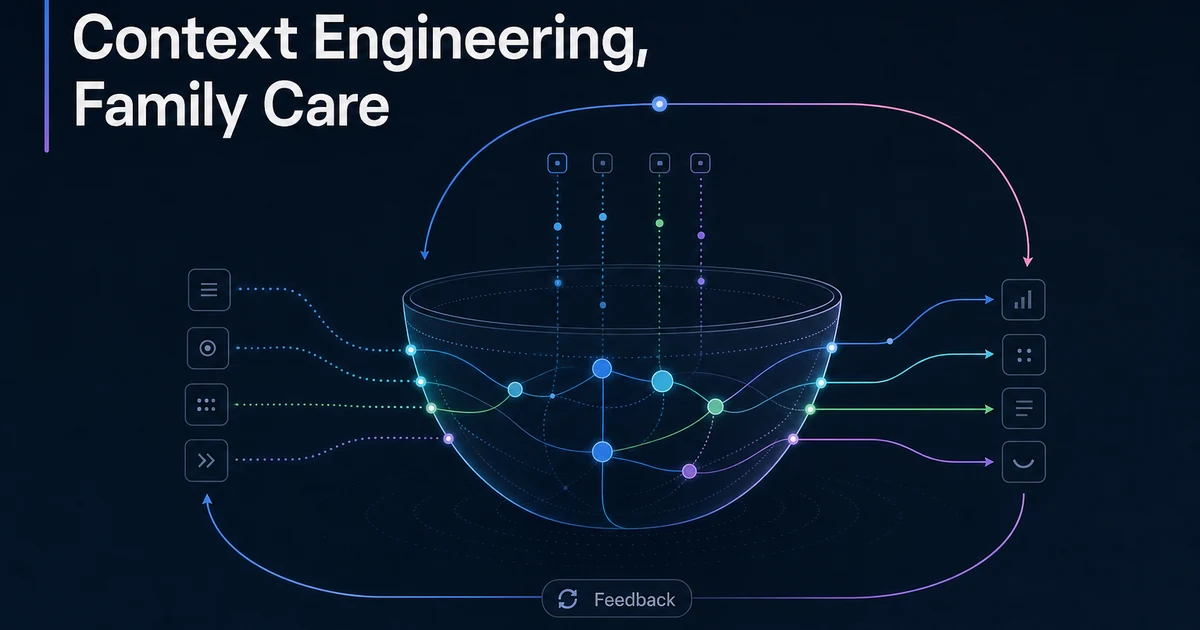
The Most Useful Thing I Could Do Was Feed My Family
It has been almost six months since I went on paternity leave. We have twins, and I’ve spent this stretch trying to take care of my family and be useful where I can.
The best way I’ve found to do that is to take ownership of food. Breakfast, lunch, and dinner. That has been transformational for me.
This isn’t a story about AI making me a chef. It’s about a skill I normally use on software, context engineering, turning out to work just as well in a kitchen.
From Chick-fil-A to Homemade
We used to order Chick-fil-A all the time. Now I’m basically cooking all of our food, and we’re eating nothing but homemade food. It’s been incredible.
That’s my own account of it, in my own words.
What AI Did for Me
I’ve leaned on AI a lot for three things:
- making different recipes
- knowing the ingredients to buy when I go grocery shopping
- reverse engineering recipes my family made, so I can make them for my family
Beyond that, AI has taught me things I always wanted to learn: how to make homemade tortillas, and the Mexican food culture of different guisados.
Baking has become the biggest thing for me. I’ve been using AI to reconstruct different pan dulce recipes, and I’ve built up a good collection. My entire family calls me the panero.
It’s amazing, and I’m very passionate about it.
Where Context Engineering Comes In
It all stems from, and is enabled by, AI, but how I use it matters.
By context engineering I mean deciding what the model sees, what it should respect, and how feedback reaches the next attempt. I’ve written about that for software in Context Engineering: The Key to AI-Assisted Development and What Is Context Engineering? A Practical Guide from Building 50 Production AI Agents.
In the kitchen, I do three things:
- Ground the AI in our family’s recipe roots. I give it where our food comes from, so it isn’t starting from nothing.
- Bring in context from the Internet. That helps build good recipes on top of those roots.
- Give it good, detailed feedback. I tell it how things actually turned out.
So the AI develops the recipes, and I act as the context engineer. I also do the cooking, the tasting, and the judging.
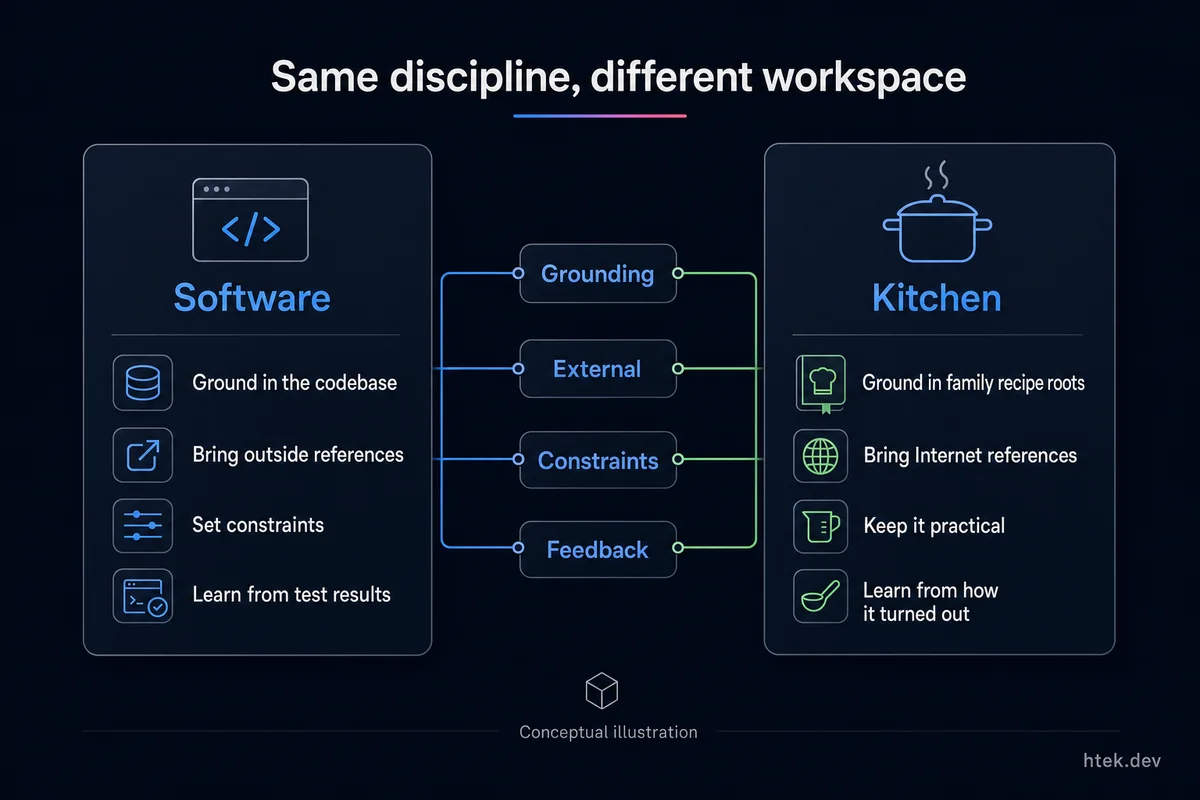 A conceptual illustration of the same discipline in two workspaces. It is not a record of any particular recipe.
What Useful Feedback Can Cover
Here is the idea, rather than a diary of specific bakes.
Useful feedback to an AI can cover flavor, texture, timing, and whether a recipe can be repeated. The point is that the feedback comes from real results and is specific. “It wasn’t right” gives the AI very little to work with, and detail gives it something to adjust.
The loop can be described simply: draft, cook, observe, refine. The cooking and judging are the parts only I can do.
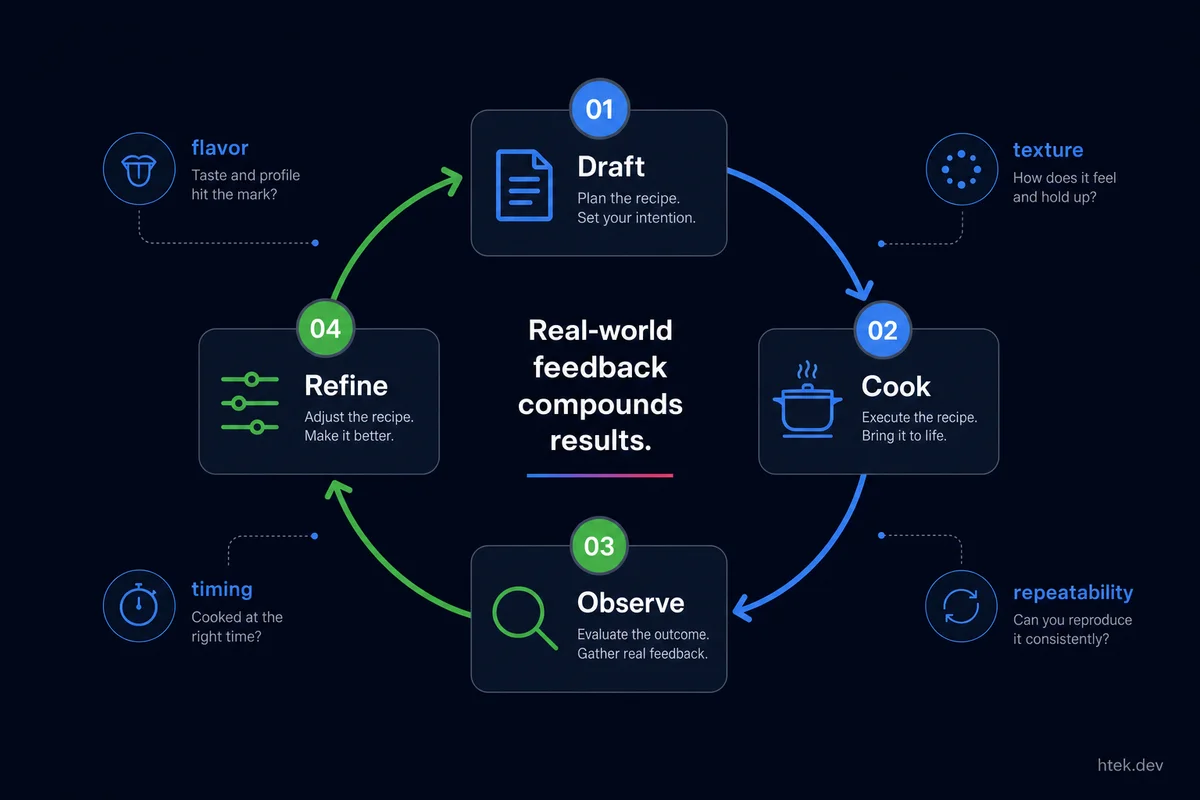 A conceptual loop with example feedback dimensions. It is an explanation, not a log of my results.
Why Detail Matters
A thin request can get a generic starting point back. If you want something that reflects your own family’s food, the roots and the feedback have to come from you.
That’s the part of context engineering that carries over from software. The model can draft, but it can’t know what your family’s food is supposed to be, or how your attempt came out, unless you tell it.
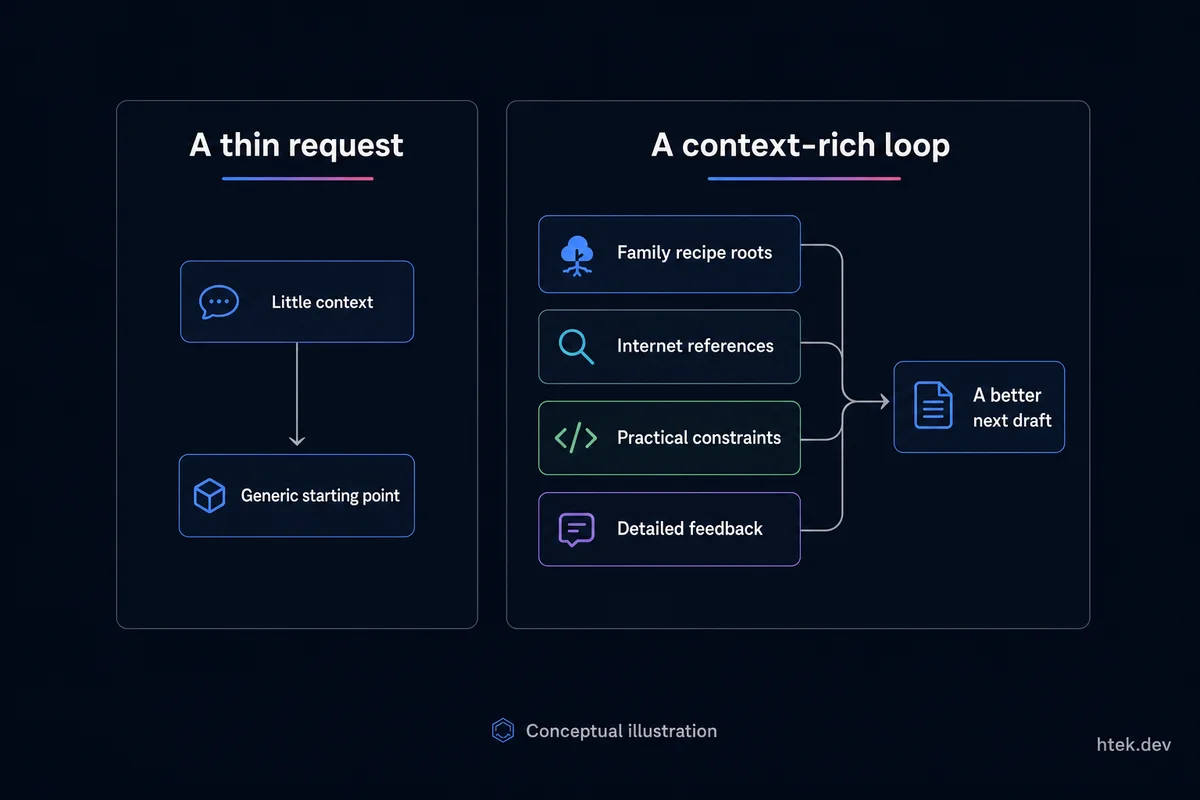 A conceptual comparison, not a measured result.
Away From the Industry, Not Away From AI
For almost six months I’ve been away from the AI industry’s updates. I haven’t been away from using AI.
I’ve kept using it in the kitchen. A companion piece covers what changed in the industry while I was away, and I’ll link it once it’s live.
The Bottom Line
I’ve been able to context engineer my way into baking, and into cooking for my family.
Everyone keeps calling me chef, but I’m not really a chef. I just like to make food for my family. That’s it.